Most of the work that makes aerial photos look good happens before the drone leaves the ground. Walk the outside of your property, tidy everything that will be visible from above, tell your neighbours and anyone at home, agree the shots you want with the pilot, and keep the day flexible for weather. This guide goes through each step, plus the differences for a house sale, a wedding or hotel venue, and a roof inspection.
TL;DR
- Look at your property from above before the shoot: bins, cars, trampolines, washing lines and building materials all show up far more than they do at ground level.
- Mow, sweep and clear the day before, and leave the finishing touches (cars moved, gates shut or open) until the pilot arrives.
- Agree the shot list, access points and any no-go areas with the pilot in advance, so nobody is guessing on the day.
- Expect a weather reschedule: wind, rain and low cloud are the usual reasons, and a flexible date gets better pictures.
- Tell people at home and next door. Privacy matters, and the pilot needs the right permissions and a clear site.
Table of Contents
- Why preparation matters more from above
- Start with a walk-round from the pilot's point of view
- What to tidy outside
- Think about the season
- Agree the brief with the pilot
- Privacy, neighbours and permission
- The day itself
- How preparation differs by job
- Check who is flying
- Perspective: what we see on the ground
- Get a quote for your property
- A final checklist
- FAQ
- Sources
Why preparation matters more from above
On the ground you view a house from the road, the front door and the garden. From 30 to 100 metres up, you see the whole plot at once: the roof, the gutters, the neighbour's shed, the pile of logs behind the garage, the bins you moved out of sight years ago. A drone has no angle where those things are hidden.
That is also the appeal. A buyer can see the size of the garden, the way the house sits in the lane, the view across the valley and the distance to the village. Good preparation means those strengths are what the picture shows.
The UK has a ceiling on how high a small drone may normally fly, which shapes which shots are possible. We explain the practical effect in our comparison of drones and helicopters.

Start with a walk-round from the pilot's point of view
Before you tidy anything, do a slow lap of the property and look at it as if you were hovering above. If you can, climb to an upstairs window or a raised part of the garden and look down. Better still, check an online satellite view of your address. It is not the same as a drone shot, but it shows what is visible from above and how the plot meets its neighbours. We compare the two in drone versus satellite imagery.
Make three lists as you go:
- Things to remove: anything movable that spoils the picture.
- Things to fix: lawn, moss, weeds in the gravel, a hanging gutter, a missing tile you already know about.
- Things to keep: the features you want in the shot, such as the terrace, orchard, pond or the view.
What to tidy outside
Driveway and front
- Move cars, vans, caravans and motorhomes. A single parked car can hide the entrance or sit awkwardly across the frame. If you want a vehicle in the picture, such as a classic car, tell the pilot.
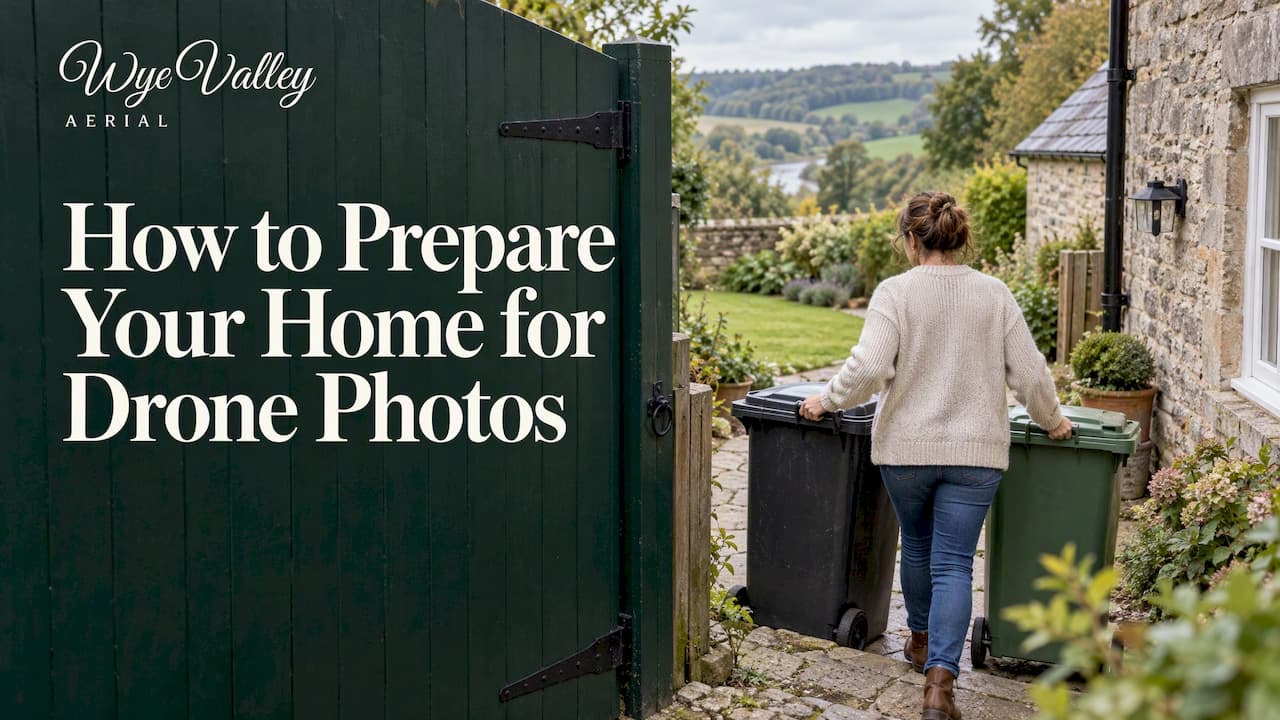
- Put bins, recycling boxes and compost bins somewhere out of sight, such as behind a fence or inside a garage.
- Sweep the drive, clear leaves and pull weeds from gravel and paving edges.
- Take down temporary items: skips, ladders, scaffolding poles, builders' bags.
- Check the gate. Open gates can look welcoming; shut gates look secure. Decide which, and make it consistent.
Garden and grounds
- Mow and edge the lawn. In autumn and winter, rake leaves from the grass and clear gutters and flat roofs, because bare lawns and unfinished beds are easy to spot from above.
- Put away toys, trampolines, paddling pools, garden furniture covers, hoses and tools.
- Take washing off the line.
- Tidy sheds, log stores and compost heaps, or screen them if they cannot be moved.
- Prune branches that hang over the roof or hide a corner of the house, but only where the work is sensible and safe. Do not cut hedges or trees in nesting season without checking the rules first.
- If you have a pond, pool or hot tub, skim the surface and uncover it. Water can look dramatic from above when it is clean.
The building itself
- Look at the roof, chimney and gutters. A drone will show moss, slipped tiles and stained render much more clearly than a ground-level photo. If you know of a problem, it is better to deal with it first or at least discuss it with the pilot.
- Wash windows and conservatory roofs. Dirty glass reflects badly.
- Close skylights, open or close curtains consistently, and remove satellite dishes or clutter that are no longer used if that is allowed.
Think about the season
The time of year changes what you need to do. In summer, lush trees can hide the house and the boundary. In winter, the same trees are bare, so the building is more visible, but lawns and borders look their weakest. Spring and autumn often give the most flattering colour in the Wye Valley, with low sun picking out fields and woodland.
We look at light, season and weather in detail in our guide to the best time for aerial photos. The short version: avoid flat midday light, and be ready to move the day if the weather turns.
Agree the brief with the pilot
A shoot goes best when you and the pilot have agreed in advance what you want. Before the day, settle:
- The purpose. A sales listing, a holiday-let page, a wedding venue brochure and a roof survey all need different pictures.
- The must-have shots. For example: a front three-quarter view, a high view showing the whole plot, a shot that shows the view from the garden, and a closer view of a feature like the barn or the pool.
- Stills, film or both. Many sellers want a handful of stills; others want a short film for a website or social media.
- Access. Where the pilot can park, where they will take off and land, whether there are locked gates, dogs, livestock or neighbours' land to consider.
- Things to avoid. Neighbouring windows, a shared drive, anything you would prefer not to feature.
- How you will receive the files. We send fully edited stills or films through a download link.
If you are unsure what a commercial brief should include, our piece on commercial drone photography deliverables and briefing lists the questions we would ask.
Privacy, neighbours and permission
Drones photograph more than you intend. The CAA says that pilots must respect privacy and not cause a nuisance, and that images or recordings in which people could be identified may fall under GDPR and the Data Protection Act 2018. Its Drone and Model Aircraft Code adds that using a camera where people expect privacy, such as inside a home or garden, is likely to break data protection law.
In practice, this means:
- Tell your neighbours. A short note or a word at the gate a few days before is enough. Your garden may be fine to film with your consent, but theirs is not yours to include.
- Tell everyone at home. Family members, tenants and guests should know when the drone is flying and whether they might be in shot. If you would rather not appear, stay indoors or out of view.
- Pick a quiet time. The CAA says never to fly over people who are crowded together, so a school-run time on a busy lane or a village event day is the wrong moment.
- Own the land, or ask. Flights from privately owned sites need the owner's permission. The CAA says you must get any applicable permission before flying from privately owned sites and must not trespass. If your home is a rental, check with the landlord or managing agent.
The wider rules on filming near other people's land are covered in drone filming over private property in the UK.
The same CAA page includes small groups of homes within 50m of each other, housing estates and villages among its examples of residential areas. If you live in a village such as those around Monmouth, Ross-on-Wye or Lydney, expect a pilot to plan the flight path and take-off point with that in mind.
The day itself
A few things help the shoot run smoothly:
- Be there for the first ten minutes. Walk the pilot round, show them the access points and point out the features you care about.
- Do the last tidy just before the flight. Move cars, close bins, shut the gates, and put pets inside.
- Keep children and pets away from the take-off area. Drones are loud and spinning propellers are dangerous.
- Do not use your own drone or a phone camera at the same time. Another aircraft in the same airspace complicates the flight.
- Be flexible. Strong wind, rain and fog are all reasons a responsible pilot will postpone. We would rather move the date than deliver mediocre or unsafe flying, and rescheduling for weather is part of how we work.
How preparation differs by job
| Job | What matters most | Prepare |
|---|---|---|
| Selling or letting a house | A clean, simple plot and a clear sense of space | Tidy drive and garden, move cars, agree the shots with your agent |
| Wedding venue, hotel or estate promotion | Atmosphere, access and guest privacy | Choose a quiet time, agree permissions with owners, set out the views to feature |
| Roof or building inspection | Safe access to the roofline and clear data | Clear the surroundings, share known problem areas, have access to the site and any consent from the building owner |
Selling a house
The goal is a picture that shows the house in its setting. Concentrate on first impressions: the approach, the garden and the boundary. If you are working with an estate agent, ask what they will use and in what format, then pass the brief to the pilot so you do not pay for the same shots twice.
Weddings, hotels and venues
Venue work is about atmosphere, so the preparation is partly about timing. Pick a day when the grounds are looking their best and no guests will be caught in shot. Hotel managers should also consider who has authority to approve a flight on the site; we set this out in three checks before approving a hotel flight and show how the pictures are used in our hotel drone marketing guide.
Roof and building checks
For an inspection the aim is evidence, not a pretty picture. Clear anything that blocks the view of the roof edges and gutters, tell the pilot about leaks, damp or previous repairs, and make sure the pilot has permission from whoever owns or manages the building. Our inspection checklist in what UK property teams should ask before a drone building inspection goes into more detail, and a drone saves putting a ladder against the wall at all.

Check who is flying
A tidy house does not help if the pilot is not properly qualified. The CAA's code says anyone flying a drone of 100g or more with a camera needs a Flyer ID, and the drone's owner needs an Operator ID. Paid work usually needs more than that. Ask what qualification they hold and whether they are insured. Our own pilot holds an A2 CofC and flies with full insurance; the wider picture is in UK drone operator qualifications for paid roof jobs.
Perspective: what we see on the ground
The most common problem we meet is not the weather or the drone. It is the part of the property the owner has stopped noticing. A skip in the corner, a boat on a trailer, the oil tank behind the barn: we see them at once from above, and so will a buyer. Our advice is to spend an hour walking round with a camera or phone held as high as you can reach. If you can see it, so can we.
The second thing is the brief. People often ask for "some nice drone shots" and then tell us afterwards they wanted the view to the river. Five minutes on the phone beforehand saves a second visit. We build a shot list for each site, give a free fixed quote in advance, and move the flight if the weather is wrong, because the valley looks very different on a still, bright morning than on a grey, blustery one.
— Rhys
Get a quote for your property
We photograph and film homes, hotels, wedding venues and estates across the Wye Valley, and we inspect roofs and buildings without ladders. You can choose from property stills, stills and a short film, a half day on site, a full day or a roof and building check, all described on our services page. Every job is quoted individually and free, with the shot list agreed first.

Tell us the address, the purpose and the dates that suit you through our website, and we will talk through what to prepare for your particular site. If you want to understand what drives a quote first, read what sits behind drone photography prices in the UK.
A final checklist
A week before
- Agree the shot list, purpose and file format with the pilot.
- Tell neighbours, family and tenants.
- Arrange any permissions from landlords or managing agents.
The day before
- Mow, sweep, clear leaves, wash windows.
- Put away toys, furniture covers and tools.
- Check the weather and talk to the pilot about moving the date.
On the day
- Move cars and bins, open or close gates, bring pets in.
- Walk the pilot round and show them the key features.
- Keep people out of the take-off area.
FAQ
How long before the shoot should I start preparing?
A week is plenty for most houses. Use the first few days for the brief and permissions, the day before for mowing and sweeping, and the morning itself for moving cars and bins. A larger estate or venue may need more time, particularly if grounds work is involved.
Should I be at home during a drone shoot?
It helps, at least at the start, so you can show the pilot round and agree the shots. Landlords and agents can usually give consent in advance. If you are not there, make sure the pilot has clear access and that anyone living at the property knows about the flight.
What if it rains or is windy on the day?
The flight is usually postponed. Drones are not designed for rain, fog or strong wind, and the pictures would be poor anyway. Agree a flexible window with your pilot so the new date can be arranged quickly.
Do I need to tell my neighbours?
You do not have to ask permission to have your own property photographed, but it is courteous and avoids complaints. The CAA says drone pilots must respect privacy, so the pilot will also try to keep neighbours' gardens and windows out of the frame. Tell them the day, the rough time and why it is happening.
Can I use the photos for my estate agent listing?
Usually yes, but agree this when you book. Tell the pilot who will use the pictures and whether you want stills, a film or both, so the files are delivered in a format that suits your agent.
Sources
- Privacy rules when flying drones, UK Civil Aviation Authority
- The Drone and Model Aircraft Code, March 2026, UK Civil Aviation Authority
- PDRA01 overview, UK Civil Aviation Authority