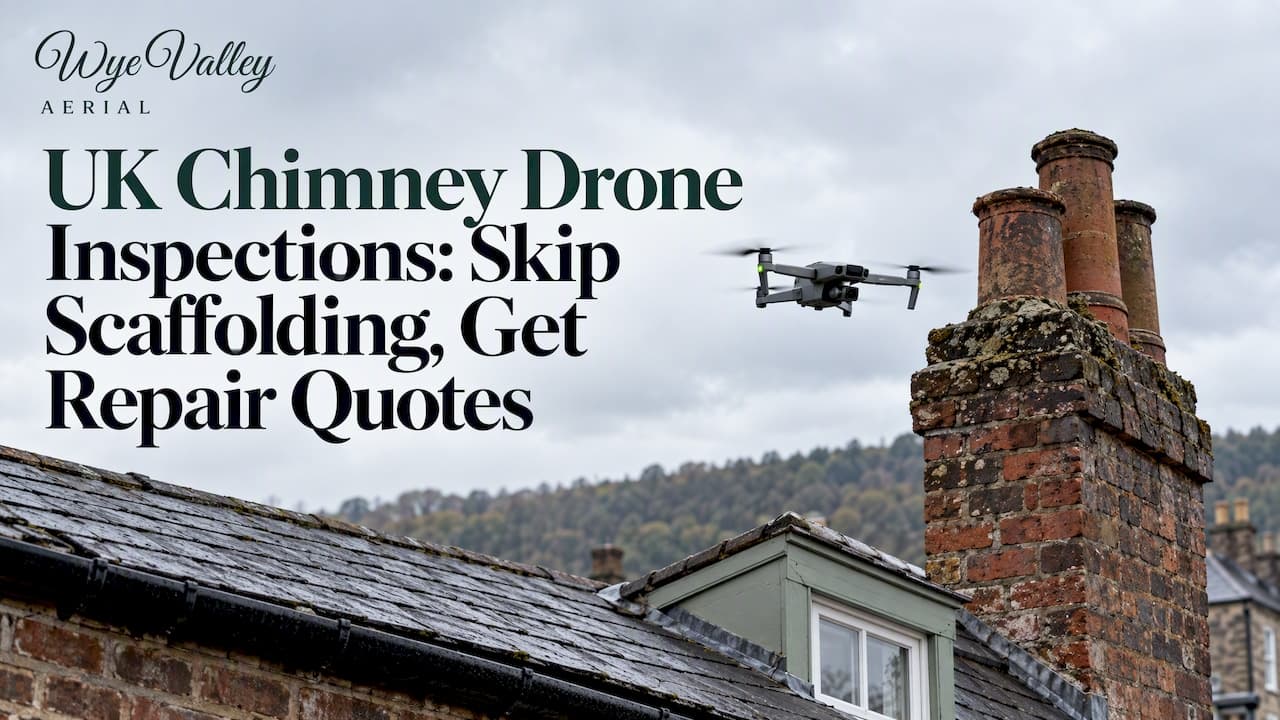
A chimney inspection drone gives you a fast, scaffold-free way to see the external condition of your stack, pots, flashing and brickwork in high-resolution photos and video, backed by a written summary. It works well as a first-line visual survey for most homes, though internal flue problems still need a sweep or borescope check. For the vast majority of visible defects, it is quicker, cheaper and safer than putting someone on a ladder.
TL;DR:
- Drone images can show cracked pots, loose bricks, damaged flashing, and blockages, but soot deposits, hidden voids, and liner faults need an internal inspection.
- Verify the pilot’s Flyer ID and A2 Certificate of Competency, ask whether PDRA01 authorization applies, and discuss 50 meter separation and privacy around neighboring homes.
- Quotes vary with stack count, travel, report detail, and access permissions; compare included photo numbers, resolution, insurance, and credentials before booking.
- Request raw, unedited photos alongside any annotated report; visits usually take under an hour, and digital files arrive within a few working days.
Table of Contents
- What a chimney drone inspection includes: process and deliverables
- Common chimney defects a drone can spot (and what it cannot reliably show)
- Legal, safety and privacy rules that affect chimney drone inspections
- Typical cost range and what affects the quote
- How to prepare and what to expect on the day
- Operator perspective and proof points from Wye Valley Aerial Imaging
- Get a chimney and roof check from Wye Valley Aerial Imaging
- FAQ
- Sources
What a chimney drone inspection includes: process and deliverables
A typical booking starts with a short call or online form where you describe the property, the number of stacks and any access issues, such as overhead cables or a shared boundary with neighbours. The operator checks the site remotely where possible and confirms a weather-dependent appointment window.
On the day, the pilot sets up a short distance from the house, checks airspace and wind conditions, then flies a series of passes to capture each chimney stack from multiple angles. Most operators shoot stills and short video clips, with 4K resolution where the drone supports it, giving enough detail to spot hairline cracks or slipped flaunching.
You typically receive:
- A downloadable gallery of high-resolution photos covering each stack and visible defect.
- A short video walkaround clip for context.
- An optional PDF report with annotated images and plain-language notes on what was seen.
These files are usually sent as a shareable download link, in formats any roofer, surveyor or insurer can open without special software.
Common chimney defects a drone can spot (and what it cannot reliably show)
From the air, a camera can pick up most of the faults that would otherwise require a ladder or binoculars to spot:
- Cracked, loose or missing chimney pots.
- Spalling brickwork or bricks that have slipped out of line.
- Failing flaunching (the mortar fillet around the pots).
- Damaged or lifted lead flashing where the chimney meets the roof.
- Vegetation growth or visible blockages at the pot or stack top.
What a drone cannot do is see inside the flue. Internal soot deposits, hidden voids in the brickwork, or a blocked liner need a proper sweep, a borescope camera, or CCTV survey rather than external imagery, a point Historic England also makes when recommending internal checks before an old chimney is brought back into use. Once you have the images, the practical next step is to send them to two or three roofers for like-for-like quotes, or pass them to your insurer or a building surveyor as supporting evidence.
Pro Tip: Ask for the raw, unedited photos alongside any annotated report. Roofers often want to zoom into detail the summary version compresses.

Legal, safety and privacy rules that affect chimney drone inspections
Any operator flying commercially in the UK needs a Flyer ID and, for most paid work, an A2 Certificate of Competency, both covered in the Drone Code. For inspections in residential streets or closer to uninvolved people, a PDRA01 authorisation is usually required, since it permits flights between 250g and 25kg within visual line of sight under specified separation rules.
Standard separation guidance keeps drones at least 50 metres from people and property not involved in the flight, with a narrower exception during take-off and landing. The same 50-metre principle comes up in other drone work, including wedding videography, and it is worth asking any operator how they plan around it on a tight residential plot.
- Confirm the operator holds a current Flyer ID and A2 CofC.
- Ask whether the flight needs PDRA01 authorisation for your location.
- Check how images of neighbouring gardens or windows will be handled.
Images of identifiable people or private gardens captured without consent can breach data protection law, according to Civil Aviation Authority guidance on privacy, which treats commercial operators as data controllers responsible for storing imagery securely.
Typical cost range and what affects the quote
Prices vary by stack count, travel distance and how detailed the report needs to be. A simple external check on a single chimney generally costs less than a job covering multiple stacks, annotated findings and a formal PDF. Full pricing detail, including what tends to push a quote up or down, is covered in this breakdown of drone roof inspection costs.
Factors that typically move the price include:
- Number of chimney stacks and how far apart they are.
- Travel time to reach the property.
- Whether you need an annotated report rather than just a photo set.
- Listed building status or other access permissions that add planning time.
When comparing quotes, ask how many photos are included, what resolution they are shot at, whether an annotated report is part of the price, and whether the operator carries both CAA permissions and public liability insurance. A fuller explanation of how operators build a quote, including the regulatory costs baked into it, is in this guide to drone photography pricing.
How to prepare and what to expect on the day
A little preparation makes the visit quicker and the images more useful.
- Clear garden furniture, washing lines or anything likely to obstruct a clean flight path near the chimney.
- Confirm access to the property and agree a appointment window, with a rough idea of a weather contingency date.
- Let neighbours know in advance if the flight path will pass close to a shared boundary.
- Be available briefly on the day to confirm access and answer any questions about the roof layout.
Most inspections take well under an hour on site, including setup and shutdown. The pilot will usually talk you through what they are about to do, check wind and airspace one final time, then fly the stack-by-stack passes before packing down.
Afterwards, expect your images, video and any report delivered digitally within a few working days, ready to forward straight to a roofer or insurer.
Pro Tip: Keep a copy of the delivered files somewhere easy to find. You may need them again months later when getting a second repair quote.
Operator perspective and proof points from Wye Valley Aerial Imaging
We run every chimney and roof inspection under a Flyer ID and A2 Certificate of Competency, with flight plans checked against current CAA rules before we take off.
That groundwork matters more than it might seem. A compliant flight plan is what lets us work close to a house safely, and it is what an insurer or surveyor expects to see behind any imagery submitted as evidence. We tailor the shot list to the chimney and roofline in front of us rather than running a generic pass, which means the images we hand back are the ones a roofer actually needs to price a repair, not a tidy but unhelpful overview.
Swapping a ladder-based check for a drone also removes the disruption of scaffolding access and the risk that comes with it, which is the whole point of choosing aerial imagery for a first-line visual survey.
— Rhys
Get a chimney and roof check from Wye Valley Aerial Imaging
We offer a dedicated roof and building check alongside our wider aerial photography services, built around the same compliance standards covered above: a qualified pilot flying under an A2 Certificate of Competency, full insurance, and flight plans that follow CAA rules.

- Free, fixed quotes before any booking is confirmed.
- Tailored shot lists for your specific chimney, roofline or stack count.
- Digital delivery of stills and video, ready to share with a roofer or insurer.
Once you have your images, sharing them with multiple trades is far easier than describing a defect over the phone, and tools like Pipeline's job management software for roofers show how tradespeople increasingly expect photo evidence attached to a quote request rather than a verbal description. To see our current services and request a free quote, visit our services page.
FAQ
How much does a drone roof inspection cost?
Prices depend on the number of stacks, travel distance and whether you need an annotated report rather than a simple photo set. For a full breakdown of what drives the price up or down, see this guide to drone roof inspection costs.
Is it legal for a drone to fly over my house?
Drone operators must follow CAA separation rules and privacy law, and flying directly over private gardens where people have a reasonable expectation of privacy can breach data protection guidance if images of identifiable people or property are captured without reason. Most routine chimney and roof surveys are flown under proper authorisation specifically to avoid this issue.
How much does a drone roof survey cost?
Costs vary with the number of stacks, the level of detail in the report and travel time to the property, so it is worth comparing at least two quotes. This pricing breakdown explains the main cost factors in more detail.
Is a drone roof survey worth it?
For most homes, a drone survey is a quick, safer way to get a clear external view of chimney and roof condition without scaffolding, and the images translate directly into more accurate repair quotes. It works best as a first-line check, with internal flue problems still needing a sweep or borescope inspection, as Historic England notes for older chimneys.
What should I check before booking a drone inspection?
Confirm the operator holds a current Flyer ID and A2 Certificate of Competency, carries public liability insurance, and has the right CAA authorisation for flying near your property. This checklist for briefing a drone inspection covers the key questions to ask before you book.